

Knowledge Base
Zinc for skin, hair and nails
You are reading:
Contents
On this page
Zinc contributes to the maintenance of normal skin, hair and nails. This is why the mineral is frequently included in supplements for skin, hair and nails. However, this does not mean that more Zinc automatically results in fuller hair, stronger nails or more attractive skin.
See more search results from us on Google
Add us as a preferred source (opens in a new tab)Zinc is one of the nutrients the body needs for normal processes. Hair loss, brittle nails and skin problems can have many different causes. A Zinc supplement should therefore primarily be regarded as an addition to the diet and not as a treatment for a medical condition.
Would you like to learn more about this mineral first? Read Zinc: function, food sources, requirements and safe use.
What does Zinc do for the skin?
Zinc supports the maintenance of normal skin. In addition, Zinc:
- contributes to the normal repair process of cells and tissues;
- plays a role in cell division;
- helps protect cells against oxidative damage;
- contributes to normal Protein synthesis.
The skin is constantly renewing itself. This process requires various nutrients, including Zinc, Vitamin C, Vitamin A, Vitamin B2, Biotin, Selenium and Copper.
What does Zinc do for the hair?
Zinc contributes to the maintenance of normal hair. Hair, like nails, consists largely of keratin, a Protein. Zinc is a component of several enzymes required for normal Protein synthesis. This is the process through which cells produce new Protein. Because hair cells divide rapidly and continuously produce new Protein, an adequate Zinc intake is relevant.
A low Zinc intake may affect the condition of the hair, but hair loss does not automatically mean that a Zinc deficiency is present.
Are you experiencing sudden, severe or persistent hair loss? Discuss this with your doctor.
What does Zinc do for the nails?
Zinc helps maintain normal nails. Nails consist largely of keratin, a Protein. Zinc contributes to normal Protein synthesis.
However, brittle, splitting or discoloured nails are not specific signs of a low Zinc intake. Frequent contact with water, cleaning products, nail products, skin conditions, infections and other physical causes can also affect the nails.
When may a Zinc supplement be relevant?
A supplement may be a useful addition when the diet does not provide enough Zinc or when the intake requires additional attention. Consider the diet as a whole rather than focusing on a single mineral.
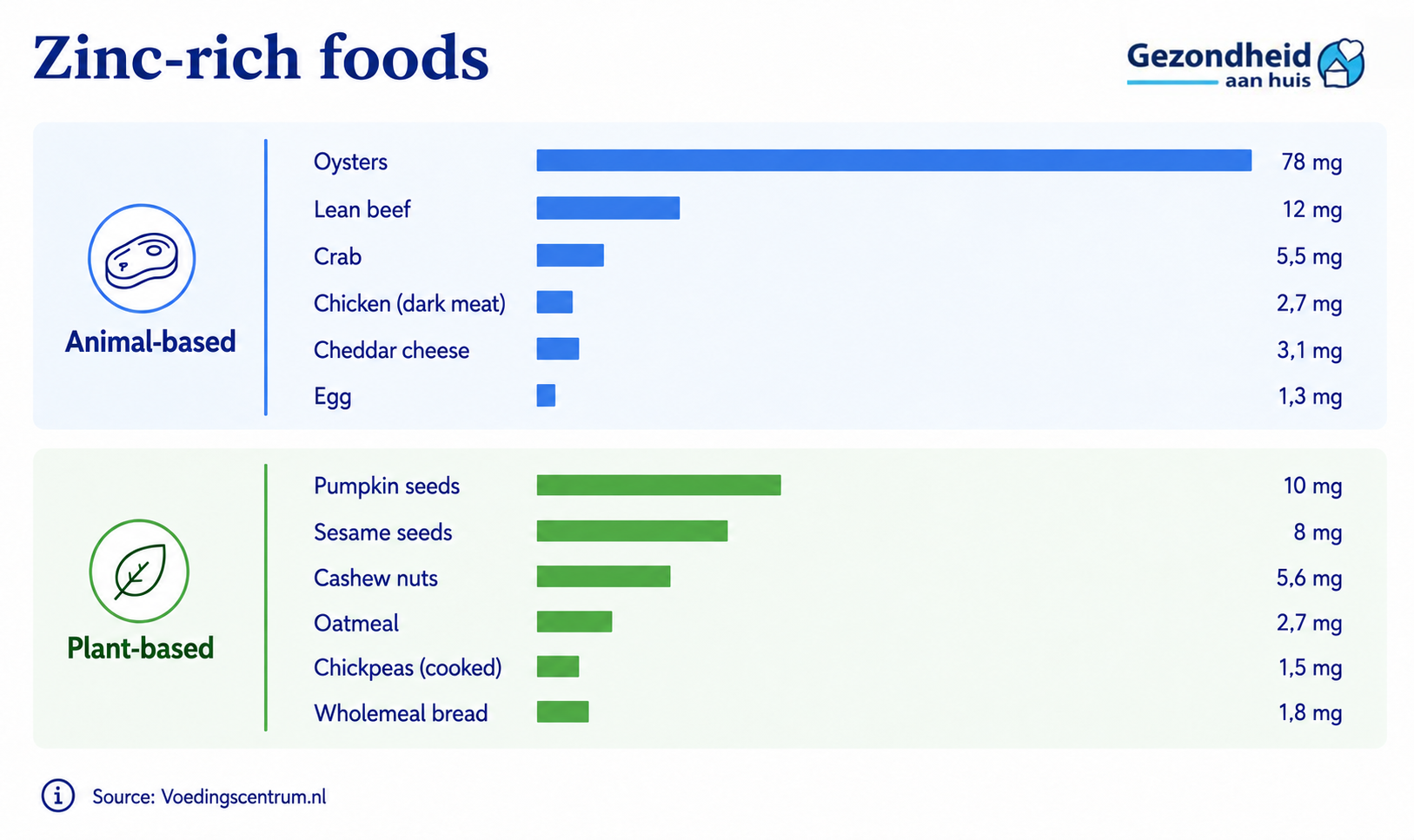
Good dietary sources of Zinc include:
- meat;
- shellfish;
- cheese and other dairy products;
- eggs;
- wholegrain cereals;
- pulses;
- nuts, kernels and seeds.
People who follow a fully plant-based diet can obtain Zinc from plant foods. However, absorption may be negatively affected by phytate found in cereals, pulses, nuts and seeds.
Combining Zinc with other nutrients
Supplements for skin, hair and nails often contain several nutrients. Common combinations include:
Zinc and Biotin
Zinc contributes to the maintenance of normal hair, nails and skin. Biotin contributes to the maintenance of normal hair and skin.
Zinc and Selenium
Both Zinc and Selenium contribute to the maintenance of normal hair and nails. Like Zinc, Selenium helps protect cells against oxidative damage.
Zinc and Vitamin C
Vitamin C supports normal Collagen formation for the normal function of the skin. Zinc supports the maintenance of normal skin and the normal repair process of cells and tissues.
Zinc and Copper
Copper contributes to normal pigmentation of the skin and hair. The addition of Copper may also be relevant because long-term intake of high amounts of Zinc can reduce Copper absorption.
Zinc and Silicon
Silicon is used in supplements for skin, hair and nails. However, there are no officially authorised European health claims for Silicon, unlike those available for Zinc, Biotin and Selenium. Avoid products or texts that attribute a guaranteed effect on hair growth to Silicon.
Do you use several food supplements? Read Combining supplements: what works together and what does not? and check whether the same nutrients appear in more than one product.
Which form of Zinc should you choose?
Supplements for skin, hair and nails may contain Zinc in forms such as:
- Zinc bisglycinate;
- Zinc citrate;
- Zinc gluconate;
- Zinc picolinate;
- Zinc methionine;
- Zinc acetate;
- Zinc ascorbate;
- Zinc orotate;
- Zinc aspartate.
You can compare the different forms by looking at the amount of elemental Zinc, tolerability, other ingredients and the total daily dose.
For a detailed comparison, read Zinc forms compared: which form suits you?.
How to compare supplements for skin, hair and nails
Before purchasing a product, check:
- Which nutrients does the product contain?
- How much elemental Zinc does the daily dose provide?
- Which form of Zinc is used?
- Does the product contain Copper?
- Are you already obtaining the same nutrients from other supplements?
- Are the health claims being used authorised?
- How many capsules or tablets must you take each day?
- Is the product intended for temporary or long-term use?
Frequently asked questions
Can Zinc stop hair loss?
Zinc contributes to the maintenance of normal hair, but a Zinc supplement is not a treatment for hair loss. Supplementing the diet may only be relevant when an inadequate intake or deficiency is involved.
Can Zinc help with hair loss related to weight loss?
Rapid weight loss, a substantial energy deficit and a low intake of Protein and other nutrients can contribute to temporary hair loss. This may occur, for example, during a strict diet, after surgery or while using weight-loss medication.
Zinc is one of the nutrients required for the maintenance of normal hair, but the overall diet is more important than one individual supplement.
Looking for a suitable Zinc supplement?
View our range of Zinc supplements. Pay particular attention to the amount of elemental Zinc per daily dose, the form of Zinc used, any added Copper and possible overlap with other supplements.
Are you unsure which product best suits your situation? Our qualified druggists and orthomolecular therapists will be happy to help you compare the composition and recommended use.
See more search results from us on Google
Add us as a preferred source (opens in a new tab)