

Knowledge Base
Organic vs. regular supplements: When does it matter?
You are reading:
Contents
On this page
Organic or non-organic? Is organic always the better choice? And does the distinction matter as much for supplements as it does for food? This article explains what “organic” means in the context of supplements, when the difference is meaningful, and when it plays a smaller role.
What does “organic” mean for supplements?
For food, an organic label refers to cultivation methods that avoid synthetic pesticides, artificial fertilisers and genetic modification, with attention to soil health and animal welfare.
For supplements, the same principles apply to plant‑ or animal‑based raw materials, although an organic version is not available or relevant for every type of supplement.
An organic certification on a supplement — such as the EU organic logo or EKO — indicates that the plant‑ or animal‑derived ingredients were grown and processed according to certified organic standards. Independent certification bodies verify compliance.
When does organic make a difference?
For supplements based on plant or animal raw materials, origin and cultivation method are key. These are the categories in which organic certification can be a meaningful consideration.
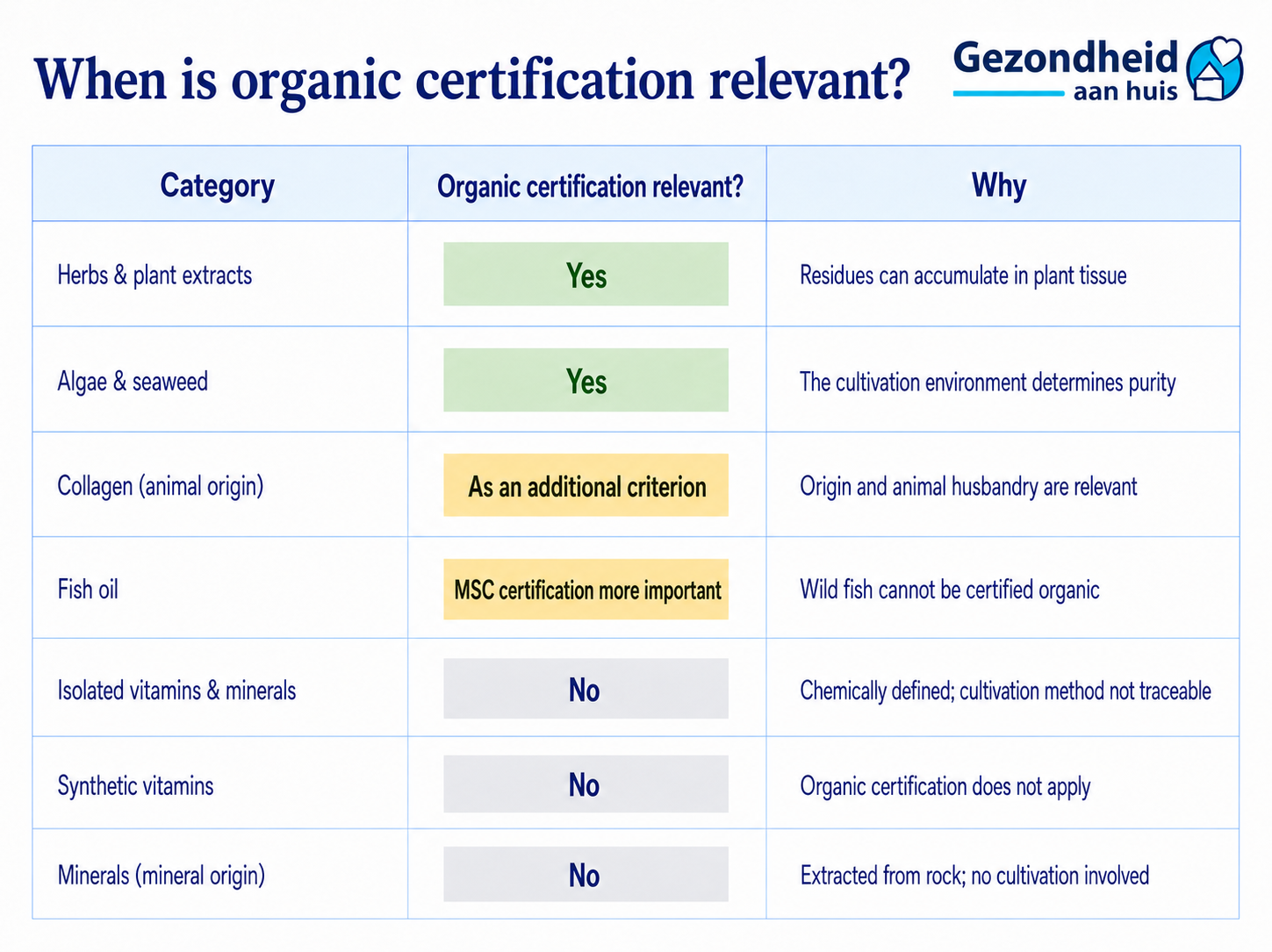
Herbal supplements such as turmeric, ashwagandha, St John’s wort or valerian are produced directly from plant material. Pesticides and other residues can accumulate in plant tissue, and organically certified cultivation reduces the likelihood of residues ending up in the final product. For herbal preparations, organic origin is therefore one of the most relevant quality indicators.
Turmeric is known to be among the crops with the highest pesticide residues in conventional farming, which makes origin an important criterion for turmeric supplements.
Algae such as spirulina and chlorella are used as sources of protein, minerals and omega‑3 fatty acids (DHA/EPA). Here, the purity of the growing environment — clean water and controlled conditions — determines the quality of the final product. Organically certified algae cultivation offers additional assurance about environmental standards.
Animal‑based raw materials, including collagen and fish oil, are also influenced by origin. Organically certified collagen comes from animals raised according to organic standards. For fish oil, an MSC certification for sustainable fishing is at least as relevant as an organic label, since wild fish cannot be certified organic.
When does organic matter less?
Not every supplement requires an organic raw material. For several categories, the distinction is less relevant.
Isolated vitamins and minerals — such as vitamin C (ascorbic acid), magnesium citrate or zinc bisglycinate — are chemically defined compounds. They are produced in purified, isolated form, and the original cultivation method of the source material is generally no longer traceable or relevant to the purity of the final substance.
Many vitamins, including B1, B2 and folic acid, are produced synthetically through fermentation or chemical synthesis. Organic certification does not apply to these nutrients.
Minerals such as magnesium, calcium or iron are extracted from rock or salt deposits rather than grown, making organic certification irrelevant for these categories.
Organic, clean label and quality: three different criteria
Organic, clean label and high raw‑material quality are often mentioned together, but they represent three separate criteria that may overlap — without necessarily doing so.
An organic supplement can still contain a long list of excipients; the certification does not comment on formulation. A clean‑label supplement can still rely on conventional (non‑organic) raw materials; a short ingredient list does not reveal how those ingredients were grown. A high‑quality supplement with active vitamin forms or chelated minerals is not automatically organically certified.
Anyone making an informed choice weighs these criteria separately and decides, for each product category, which aspect matters most.
In summary: when should you choose organic?
Organic certification is not a guarantee of overall quality, but for certain product categories it is a meaningful consideration.
If you would like to know which organic or sustainably certified products are available in our range, our pharmacy assistants and orthomolecular therapists are happy to help.
About this article

Available in